


 Guide Categories
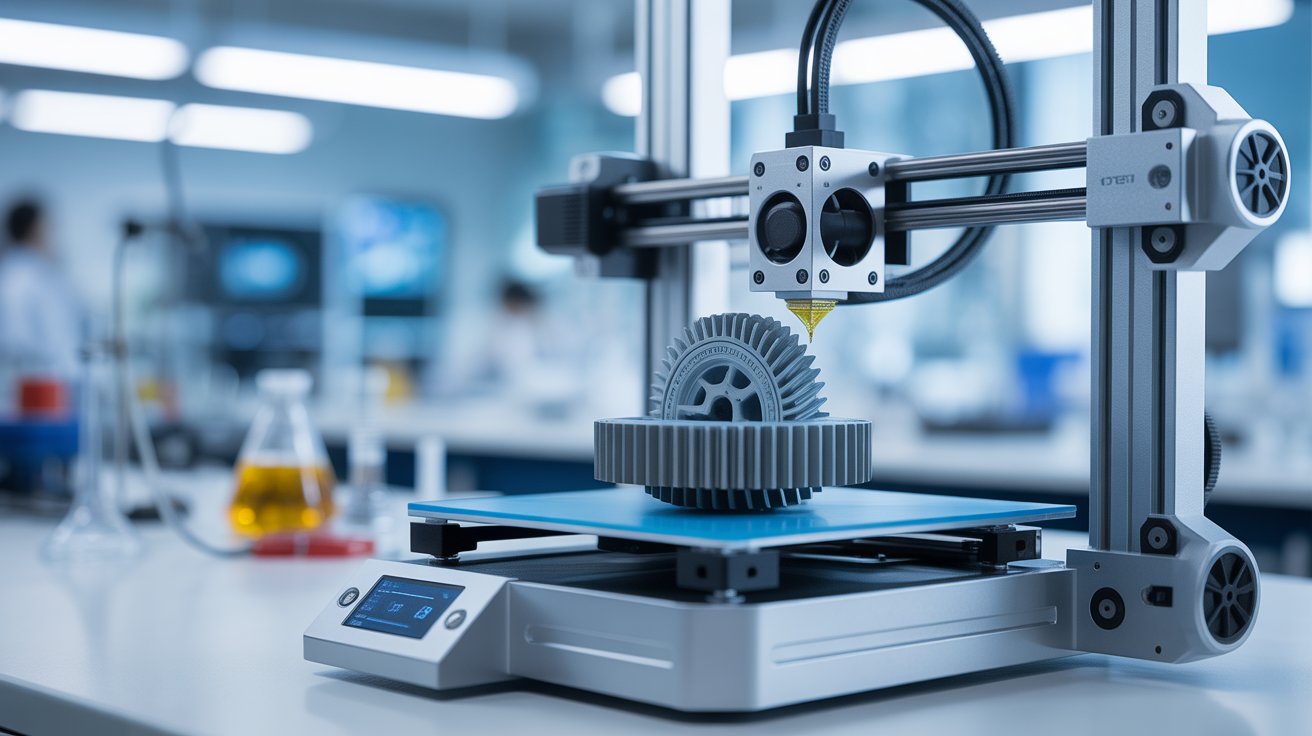
You can make money with a 3D printer, but the printer itself is not the business. Profit comes from solving a specific problem for a specific customer: a replacement part nobody stocks, a useful product for a hobby community, or a fast prototype for a local company.
This guide covers practical ways to earn from 3D printing, how to price your work, and the legal point that many new sellers miss.
8 Realistic Ways to Make Money with 3D Printing
1. Print Parts for Local Customers
Offer printing to people who have a file but no machine: students, engineers, makers, and small companies. It requires little marketing to begin, but you will compete on service and reliability, not just price.
2. Sell Your Own Designs as Physical Products
Original products give you the most control. Focus on a narrow niche where standard products fall short, such as organizers for a specific tool, accessories for a popular hobby, or custom fittings.
3. Sell Digital 3D Models
Designers can sell downloadable files, so each extra sale requires no additional printing or shipping. The trade-off is that it takes strong design skill and time to build an audience.
4. Make Replacement and Repair Parts
Discontinued plastic clips, knobs, and brackets can be valuable when the alternative is replacing a whole appliance or machine. Be careful with safety-critical parts, including anything used in brakes, steering, electrical protection, or medical use. Those are not suitable for casual printing.
5. Offer Custom Name and Gift Items
Personalized signs, keychains, and event gifts can sell well because customization justifies a higher price than a generic product. Seasonal demand can be strong, but so can competition.
6. Produce Jigs and Fixtures for Workshops
Local workshops often need holders, guides, and alignment tools. This can be a good business-to-business niche because a part that saves labor is worth much more than its plastic.
7. Prototype for Startups and Inventors
Product developers need quick iterations. If you can also offer CAD help, you become a design partner rather than just a machine operator, and that work is easier to charge for.
8. Teach 3D Printing or Service Printers
Classes for schools and hobbyists, and repair or setup services for printer owners, make use of your knowledge without relying on selling printed items.
How to Price 3D Prints
Do not price by the weight of plastic alone. A basic formula is:
Price = (material + machine time + labor + packaging + platform fees + failure allowance) + profit
| Cost item (illustrative) | Assumption | Amount |
|---|---|---|
| Material | 80 g at $25 per kg | $2.00 |
| Machine time | 5 hours at $2 per hour | $10.00 |
| Labor | 20 minutes at $20 per hour | $6.67 |
| Packaging and fees | Estimate | $3.00 |
| Failure allowance | 10% of the above | $2.17 |
| Cost | $23.84 | |
| Price with 40% margin | Cost divided by 0.6 | $39.73 |
These figures are examples. Replace them with your real costs. The important insight is that plastic is only a small part of the true cost. See our full guide to 3D printing cost for more detail.
Licensing: Can You Legally Sell That Print?
A free model is not automatically free for commercial use. Before selling a print made from someone else's design, read the license.
| License or situation | Can you sell prints? |
|---|---|
| Your own original design | Yes, provided it does not copy protected work |
| CC0 | Generally yes |
| CC BY | Generally yes, with attribution |
| CC BY-SA | Generally yes, with attribution and share-alike terms |
| CC BY-NC or personal-use only | No, unless the designer gives permission |
| Characters, logos, and brands | Usually no without permission from the rights holder |
Selling platforms can be stricter than the license. Reports indicate that Etsy tightened its rules in June 2025 around 3D-printed items based on designs not created by the seller, so read the current seller policy before you list anything. This guide is general information, not legal advice.
Mistakes That Reduce Profit
- Competing only on price: there will always be someone willing to charge less.
- Ignoring failed prints: failures use machine time and material.
- Selling products that are too easy to copy: without a brand, service, or design advantage, margins shrink quickly.
- Forgetting tax and business rules: check registration, invoicing, and product-safety requirements where you live.
- Buying machines too early: prove demand with one reliable printer first.
How to Start
- Choose one niche and one customer type.
- Make three sample products or service offers.
- Calculate a price that includes your time.
- Test demand locally or with a small online listing.
- Keep what sells and improve it before expanding.
Material choice matters too. Our materials guide can help you choose the right plastic for each product.
Frequently Asked Questions
Is 3D printing profitable?
It can be, but results vary widely. Profit depends on your niche, pricing, sales channel, and whether your time is properly counted. No printer guarantees income.
Can I sell things printed from Thingiverse models?
Only if the individual model license and the rules of the platform where you sell both allow it. Check each model separately and keep a record.
What is the best thing to 3D print and sell?
There is no single best product. The strongest opportunities are specific, hard-to-buy items for a clearly defined group of customers.